

If you were old and conscious enough then – back in the year 1994 – to sink in and experienced first hand the idea of musical greatness in a form of hip hop classics namely Nas’ Illmatic; or perhaps in 1996 – when Tupac’s All Eyez On Me was dropped – you saw history unfolding and I envy you.
Years passed, Nas continues to make one great record after another, yet Illmatic is still untouchable. Tupac lost his life seven months after the release of All Eyez on Me and as the hip hop world grieved for its losses; hip-hop starting to lose its touch and esthetics to mainstream pressure caused an overabundance subpar hip-hop. For people who grew up in the ‘80s, witnessing the birth of its own hip-hop classics that define the generation have always been a dream and yet it all still seems surreal… until the world was introduced to the man who gave birth to a breathtaking debut that somehow ends the long wait for a the next superstar. His name is Kendrick Lamar.
The Dr.Dre-endorsed Lamar began to stir conversations on the blogosphere for his breakthrough, Overly Dedicated EP, in 2010 before releasing the critically acclaimed Section.80 the following year. Critics and fans alike weren’t afraid to show their affection for this Compton-based rapper; some even dubbed him as the new prince of hip-hop – a savior. Through Section.80, Lamar challenged the idea of mainstream hip-hop with a concept album that addresses generational-symptoms with lyrics that carry a socially-conscious message. Combine that with solid hooks and his fluid rapping style, Section.80 made it into every major album of the year list, which he greatly deserves.
good kid mAAd city, on the other hand doesn’t ride on the same conceptual record that sets it foundation for Section.80. The rapper’s major label debut is however written in a form of a narration with his Compton’s teenage years as it’s main setting – complete with flashbacks (“Backseat Freestyle”); present day Lamar point-of-view (“Sing About Me, I’m Dying of Thirst”); alongside an ongoing storyline in between voicemail recordings of his parents giving parental advices whilst he was taking out his mother’s van.
The album opens with a prayer, Lamar begins telling the story of his meeting with a girl called Sherane in “Sherane a.k.a Master’s Splinter” and sings, ‘I strictly had wanted her thighs around me/Seventeen, with nothing but pussy stuck on my mental.’ His tale of Sherane continues in love jam “Poetic Justice,” (featuring Drake) which samples Janet Jackson’s “Any Time Any Place.”
Descriptive language is Lamar’s strength and what sets him apart from other rappers now. The way he uses vivid imagery in “The Art of Peer Pressure,” a number about how even the good kid could lose to peer pressure as he raps is a perfect example of this. ‘I hit the back window in search of any Nintendo / DVDs, plasma screen TVs in the trunk / … My mama called – “Hello? What you doin’? “Kicking it” / I should’ve told her I’m probably ‘bout to catch my first offence with the homies.’ He makes the mundane seems fascinating, the sign of a great poet and lyricist. The album’s first single “Swimming Pool (Drank)” has similar explicative narration showcasing Lamar’s intricate attention to detail in a number about going bender.
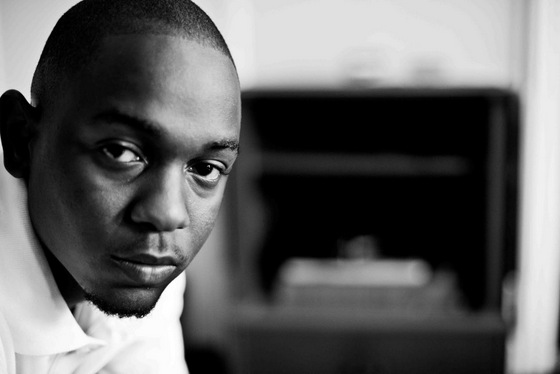
Unlike the majority of hip-hop records out there, good kid is a thankfully light on guest features. The album sees him collaborating with relatively unknown artists like Anna Wise of Sonnymoon in the aspiring self-conscious number “Real” to least-expected rapper who’s very unlikely to be seen as somewhat ‘aligned’ to Lamar or any of his Black Hippy crew-type-of-hip-hop like Drake. Of course, nothing beats his collaboration with the legendary Dr Dre in “Compton” (who also mixed and produces some of the tracks in this record) and notable Compton-origin rapper MC Eiht in “mAAd City,” but even these legendary features do not overshadow Lamar as its main character. Somehow good kid manages to build that contextual balance and understanding in each song where guest features are merely providing added depth to Lamar’s already solid delivery.
From on-point storytelling to a matured perspective, good kid mAAd city is a hip-hop record that captures reality, substance and wisdom in a journey of a teenage kid reaching adulthood. Count these award-winning lyrical pointers with fist pumping hook, brilliant sampling, and Lamar’s mad fluid skills that are sometime breathless and intense yet melodramatic and sometime he got brash yet still laidback; add all these together with expensive production budget while still not losing its rawness and you’re looking at a record that will not just grow on you, but itself will end up becoming a hip-hop reference in the future.

Latest posts by Nazirah Ashari (see all)
- Album Review: Yuna – Nocturnal - November 5, 2013
- Album Review:We Are Twin –Self Titled EP - August 29, 2013
- Stream We Are Twin’s Debut EP - August 21, 2013


Pingback: Eoin Loveless of Drenge on the band’s new album Undertow - Best New Bands
Pingback: New Bands at Afropunk Fest Brooklyn 2016 - Best New Bands